If you looked at the headlines in mid-November, you’d think the sky was falling. Between the 36-day government shutdown in the U.S., the renewed “tariff chaos,” and the sudden jitteriness around AI valuations, the markets have been moody.
My portfolio felt that moodiness. For the first time in a few months, my net worth has taken a step back.
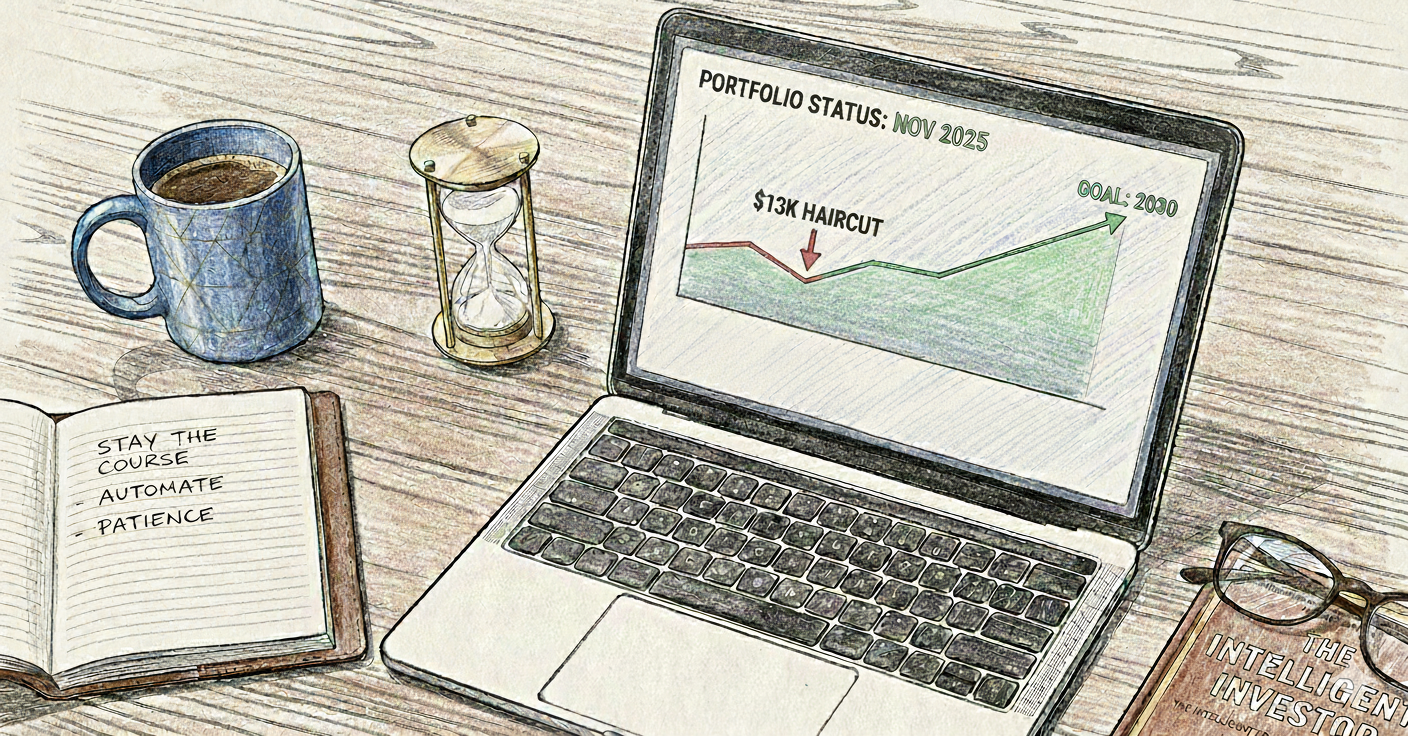
As we stare down the barrel of December, my investable net worth is down about 2.27% from last month. Performance would have been worse if I hadn’t continued to DCA into low-cost index funds.
The biggest drop was in crypto as it remains a highly volatile & speculative asset class. Fortunately this is a small percentage of my overall net worth. I currently have no plans to purchase more crypto.
Investable portfolio breakdown as of November 30, 2025
(ie. excluding primary residence, cash & emergency funds)
| Asset Class | Value (CAD) | % Change vs October |
|---|---|---|
| Stocks (ETFs/Individual) | $720,477 | -0.83% |
| Crypto | $53,528 | -19% |
| INVESTABLE NET WORTH | $775,006 | -2.27% |
- Month-over-Month Change: -$12,735
- Year-to-Date Gain: +$155,711
- Progress to Goal: 55 Months to 2030
What Happened in November?
If you are tracking your own numbers, you might be wondering why the portfolio is down even though the TSX hit record highs late last week. The answer lies in two “Pragmatic” realities: Currency and Volatility.
1. The “Tariff Tantrum” & The Shutdown
Global markets hated the uncertainty this month. The renewed trade tensions and the prolonged U.S. government shutdown caused a sharp dip mid-month. While the S&P 500 and TSX recovered late in the month (thanks to the 2.6% GDP surprise here in Canada), my portfolio snapshot captured some of that mid-month volatility, particularly in the tech sector where AI valuations are finally coming back to earth.
2. The Currency Headwind
Here is a detail many Canadian investors miss: The Canadian Dollar strengthened.
When the Loonie rises (as it did this week, trading up to ~0.72 USD), the value of my U.S. holdings drops when converted back to CAD. I own a lot of U.S. index funds. The U.S. market went up, but the currency conversion ate those gains. This is the “invisible tax” of international diversification, but it works in our favor just as often as it works against us.
3. The Housing Cool-Down
Real estate across Canada is officially cooling. While I haven’t written down the value of my property this month, I am not writing it up, either. The days of easy equity gains are paused as the market absorbs the current interest rate environment.
4. The Crypto Market Crashed
Crypto is down this year. With interest-rate cuts now looking less likely, money is moving out of riskier assets and into safer places. This creates less demand for crypto, which makes prices drop. Some traders who used borrowed money were forced to sell when prices fell, pushing the market even lower. Big investors also pulled money from crypto funds, reducing liquidity and making the market more sensitive to swings. Overall, there is a mix of economic uncertainty, less buying power, and lower confidence rather than any single dramatic event.
The Pragmatic Take: Why I Am Not Selling
When the headlines are screaming about trade wars and political gridlock, I turn to Warren Buffett. He famously said:
“If you mix your politics with your investment decisions, you’re making a big mistake.”
If I had sold during the mid-month panic when the shutdown news was at its peak, I would have locked in losses. Instead, I did nothing. Actually, I did one thing: I let my automated investments run.
This is the power of Dollar Cost Averaging (DCA).
Every day, regardless if markets were up or down, I bought more index fund units. I didn’t have to summon the courage to click “buy”; the system did it for me.
In the accumulation phase, volatility is your friend. It allows you to buy more shares for the same amount of money.
The Road to 2030
I am currently 5 years and 1 month away from my target retirement goal.
A $10k drop is a blip. It represents less than 2% of the portfolio.
If you are in your 20s, this volatility is a gift—buy more.
This is a stress test. If a 1% drop keeps you up at night, your asset allocation is too aggressive. For me, I’m sleeping just fine.
Next Month: I’ll be doing a deep dive into my financial performance for the year & lessons learned.
Stay the course.
— The Pragmatic Millionaire
Leave a Reply